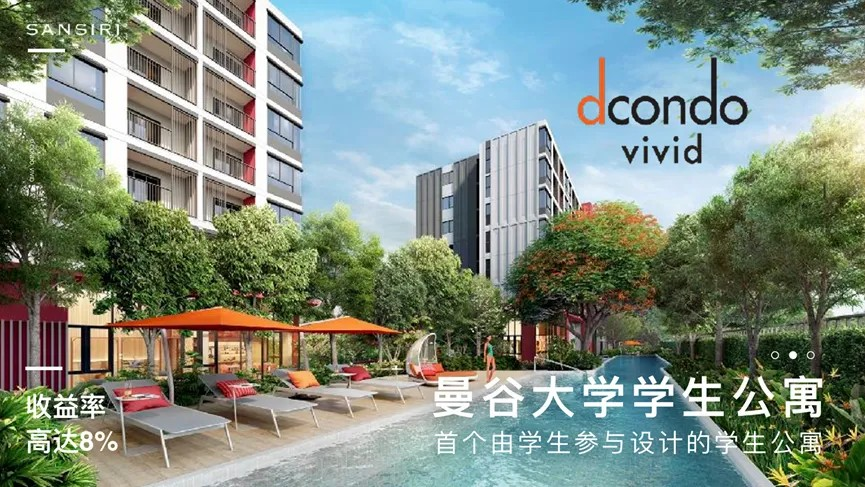
“买房送签证”不再是“套路”:泰国开启“买房+租房”长期签证时代
今天开始,泰国房产相关的朋友圈里,陆续刷出同一条消息:在泰国买房,可以申请长期签证了。类似的说法,其实并不新鲜,过去这些年里,它更多出现在中介的宣传语中,被反复提起,却始终缺乏清晰的政策路径和官方文件支撑,因此大多数人听过,却很少真正当回事。
Starting today, a single piece of news has been circulating widely across Thailand real estate–related social media feeds: buying property in Thailand can now be used to apply for a long-term visa. Similar claims are not new. Over the past several years, they have frequently appeared in agents’ marketing slogans—repeated often, yet lacking a clear policy pathway or official documentation. As a result, most people had heard of the idea, but few ever took it seriously.

但这一次,情况确实发生了变化。从目前披露的信息来看,泰国正在通过投资路径,正式把买房与符合条件的租房、长期租赁纳入长期居留的可行方案之中。也就是说,过去停留在营销层面的“买房送签证”,开始转化为可以被签证体系接纳、并具备实际操作空间的居留路径。
This time, however, the situation is genuinely different. Based on currently disclosed information, Thailand is formally incorporating property purchases—together with qualifying rental arrangements and long-term leases—into viable pathways for long-term residency through investment channels. In other words, what once existed mainly as a marketing concept, “buy property and get a visa,” is now being translated into a residency pathway recognized by the visa system and supported by practical implementation mechanisms.

从签证逻辑上看,这已经不是简单的政策微调,而是一项足以写进泰国签证史的里程碑式变化——泰国,正在开启一个“以房产投资换取长期居留”的新阶段。
From a visa-policy perspective, this is not a minor adjustment. It represents a milestone-level shift that deserves a place in Thailand’s visa history. Thailand is entering a new phase in which long-term residency can be exchanged for real estate investment.
◆ ◆ ◆ ◆
这项变化真正改变了什么
What Has Truly Changed
◆ ◆ ◆ ◆
如果只看表面,“买房或租房可以办长期签证”似乎只是多了一种选择,但从更深一层来看,它改变的是泰国长期居留的底层逻辑。
On the surface, “obtaining a long-term visa by buying or renting property” may seem like merely an additional option. At a deeper level, however, it fundamentally reshapes the underlying logic of long-term residency in Thailand.
过去,外籍人士在泰国停留,主要依附于身份属性——旅游、退休或工作,签证类型与个人身份强绑定,而房地产更多只是生活消费或资产配置,并不直接对应居留资格。
Previously, foreign residents’ stay in Thailand was primarily tied to identity-based categories—tourism, retirement, or employment. Visa types were tightly bound to personal status, while real estate functioned mainly as a form of consumption or asset allocation, without directly conferring residency rights.

而现在,新的逻辑正在形成:居留资格不再只取决于你是谁,而取决于你是否在当地形成了持续、可核查的投资关系。无论是购房,还是达到金额和期限要求的租房、长期租赁,本质上都是通过稳定投入,换取长期合法停留资格。
Now, a new logic is taking shape: residency eligibility is no longer determined solely by who you are, but by whether you have established a continuous and verifiable investment relationship within the country. Whether through purchasing property or meeting the required amount and duration for rentals or long-term leases, the essence remains the same—exchanging stable, ongoing investment for long-term lawful residence.

泰国第一次在制度层面明确承认,房地产投资本身,可以成为长期居留的独立支撑点。
For the first time at an institutional level, Thailand has explicitly acknowledged that real estate investment itself can serve as an independent pillar supporting long-term residency.
◆ ◆ ◆ ◆
这条路径用的是什么签证
Which Visa Does This Pathway Use?
◆ ◆ ◆ ◆
从目前公布的信息来看,这条路径所依托的,并不是一张全新创造的签证,而是基于 Non-B 签证体系进行延展和使用。这也解释了为什么它更像是一次制度重组,而非横空出世的新政策。
Based on currently available information, this pathway is not built upon an entirely new visa category. Instead, it is an extension and restructuring within the existing Non-B visa framework. This explains why the change feels more like a systemic reorganization than a sudden, entirely new policy.
在以往的认知中,Non-B 更多与商务、任职、公司经营相关。但在这次调整中,它被赋予了新的适用场景——不再只围绕“工作行为”,而是延伸到可被核实的长期投资行为。
Traditionally, the Non-B visa has been associated with business activities, employment, and company operations. Under the new adjustments, however, its applicable scope has been expanded beyond “work-related behavior” to include verifiable long-term investment activities.

换句话说,这类签证强调的是居留本身,而非工作权限,申请人可以长期合法居住,但并不自动获得在泰国工作的资格。
In other words, this type of visa emphasizes residency itself rather than employment rights. Applicants may legally reside in Thailand on a long-term basis, but this does not automatically grant permission to work in the country.
◆ ◆ ◆ ◆
买房、租房、长期租赁都可行
Property Purchase, Rental, and Long-Term Lease: All Are Viable
◆ ◆ ◆ ◆
从现阶段已经明确的执行标准来看,这条长期居留路径对应着清晰的投入门槛。
At the current stage of implementation, this long-term residency pathway comes with clearly defined investment thresholds.
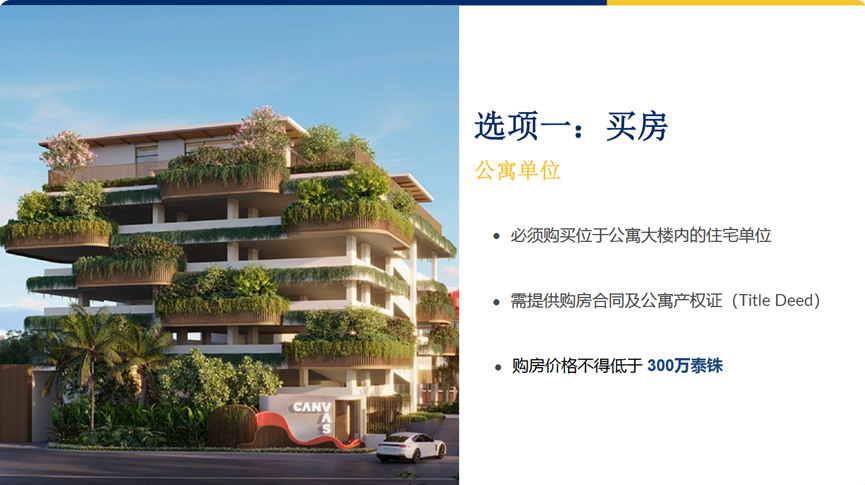
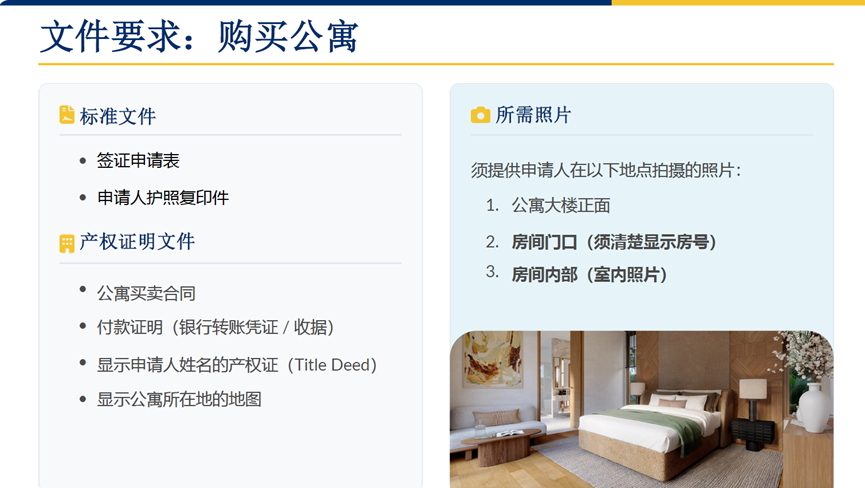
第一种方式是买房。申请人需购买位于公寓大楼内的住宅单位,购房金额不低于 300 万泰铢,并提供正式购房合同及产权证(Title Deed)。这一方式强调明确、可核查的产权关系,更接近传统意义上的“投资换居留”。
The first option is property purchase. Applicants must purchase a residential unit within a condominium building, with a minimum purchase price of THB 3 million. Official purchase contracts and the title deed must be provided. This option emphasizes clear, verifiable ownership and is closest to the traditional concept of “investment in exchange for residency.”
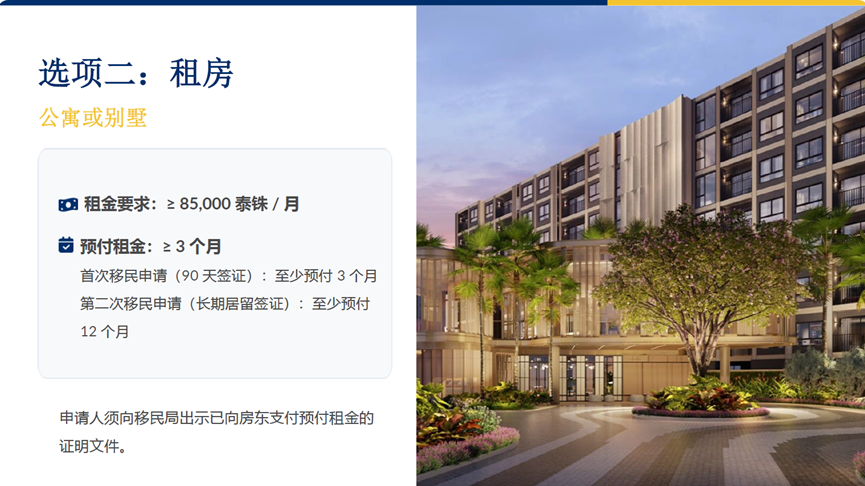
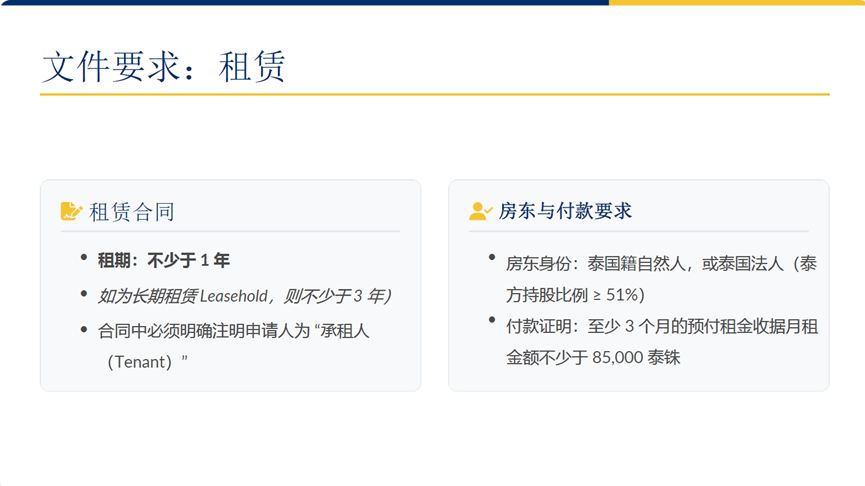
第二种方式是租房。这里的租赁并非短期居住,而是被视为一种持续性的投资行为。租赁对象可以是公寓或别墅,月租金需达到 85,000 泰铢以上。首次申请通常需要预付至少 3 个月租金,在进入长期居留阶段时,往往需提供不少于 12 个月的预付租金证明。
The second option is rental. This is not short-term accommodation, but rather a form of sustained investment. The rental property may be a condominium or a villa, with a monthly rent of at least THB 85,000. For initial applications, at least three months of prepaid rent is typically required, while entry into the long-term residency stage often requires proof of no less than 12 months of prepaid rent.
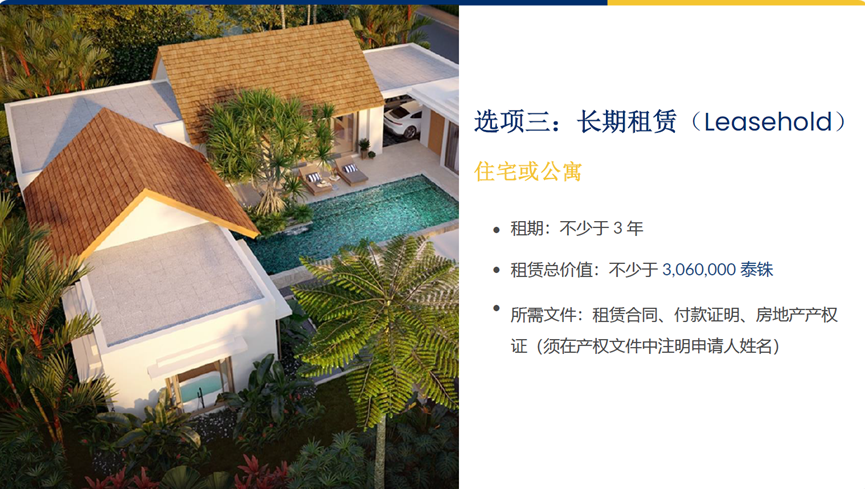
第三种方式是长期租赁。该方式通常要求租期不少于 3 年,整体租赁总价值不低于 306 万泰铢,并需在产权文件中明确标注申请人信息。无论选择哪种方式,核心标准始终一致:是否形成了一笔长期、稳定、可被持续核查的房地产投资关系。
The third option is long-term lease. This option usually requires a lease term of no less than three years, with a total lease value of at least THB 3.06 million. The applicant’s information must be clearly stated in the property documentation. Regardless of the option chosen, the core criterion remains the same: whether a long-term, stable, and continuously verifiable real estate investment relationship has been established.
◆ ◆ ◆ ◆
目前的实际执行范围
Current Scope of Practical Implementation
◆ ◆ ◆ ◆
需要特别说明的是,从执行层面来看,这项长期居留路径目前仍处于初期落地阶段。截至目前,相关申请主要是通过尚思瑞(Sansiri)旗下的指定项目进行操作,由开发商配合完成材料准备与递交流程。这也是为什么近期关于该政策的消息,最先集中出现在特定开发商和项目层面,而尚未全面铺开。
It is important to note that, at the execution level, this long-term residency pathway is still in its early stages. As of now, applications are primarily being processed through designated projects under Sansiri, with developers assisting in document preparation and submission. This explains why news of the policy has first emerged from specific developers and projects, rather than being broadly promoted across the entire market.

这并不意味着未来只限于单一开发商,更合理的理解是,尚思瑞扮演了“先行落地者”的角色。随着移民口径进一步明确,后续不排除其他大型开发商跟进,但在现阶段,仍需以已明确对接的项目为准。
This does not mean the policy will be permanently limited to a single developer. A more reasonable interpretation is that Sansiri is acting as an early implementer. As immigration guidelines become clearer, other major developers may follow suit. For the time being, however, applicants should rely on projects that have already established official coordination channels.
◆ ◆ ◆ ◆
能待多久,怎么续签
Length of Stay and Renewal Process
◆ ◆ ◆ ◆
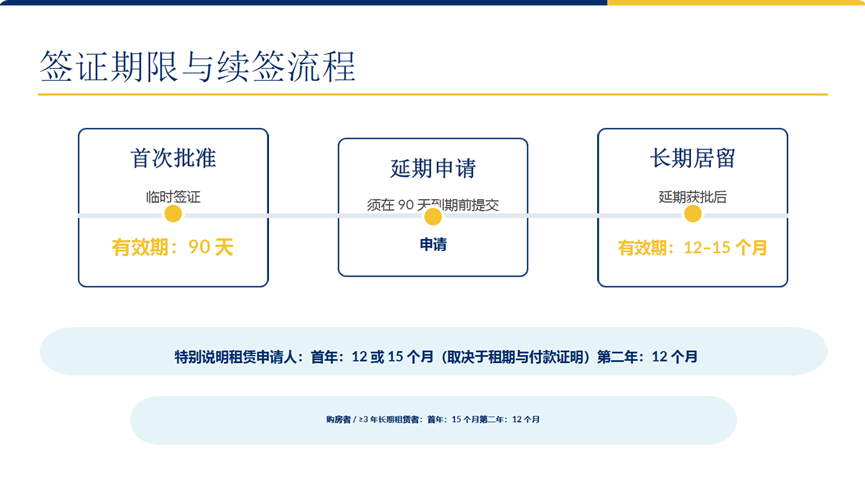
在时间结构上,这类长期居留签证并非一次性给出多年有效期,而是采取分阶段延展的方式。首次获批通常为 90 天临时签证,用于完成材料核查与延期申请。
In terms of duration, this long-term residency visa is not granted as a multi-year permit all at once. Instead, it follows a phased extension structure. Initial approval is typically a 90-day temporary visa, used for document verification and extension processing.

进入长期居留阶段后,签证有效期一般为 12 至 15 个月。购房者或三年以上长期租赁者,首年通常可获得 15 个月;以租房方式申请的,首年多为 12 个月左右。此后按年续签,前提是房产持有或租赁关系持续有效,投入金额未中断。
Upon entering the long-term residency stage, the visa is generally valid for 12 to 15 months. Property purchasers or holders of leases of three years or more usually receive 15 months in the first year, while rental-based applicants typically receive around 12 months. Subsequent renewals are processed annually, provided that property ownership or rental relationships remain valid and investment amounts are uninterrupted.
只要条件稳定,续签更像年度确认,而非重新审核资格。
As long as conditions remain stable, renewals function more like annual confirmations rather than full re-evaluations of eligibility.
◆ ◆ ◆ ◆
家庭成员能否一起申请
Can Family Members Apply Together?
◆ ◆ ◆ ◆
这类长期居留签证并不只面向个人,也覆盖现实中的家庭需求。根据现有规则,配偶、子女及父母均可在符合条件的情况下,作为家庭成员一同申请。
This long-term residency visa is designed not only for individuals but also to accommodate family needs. Under current rules, spouses, children, and parents may apply together as dependents, provided they meet the relevant criteria.
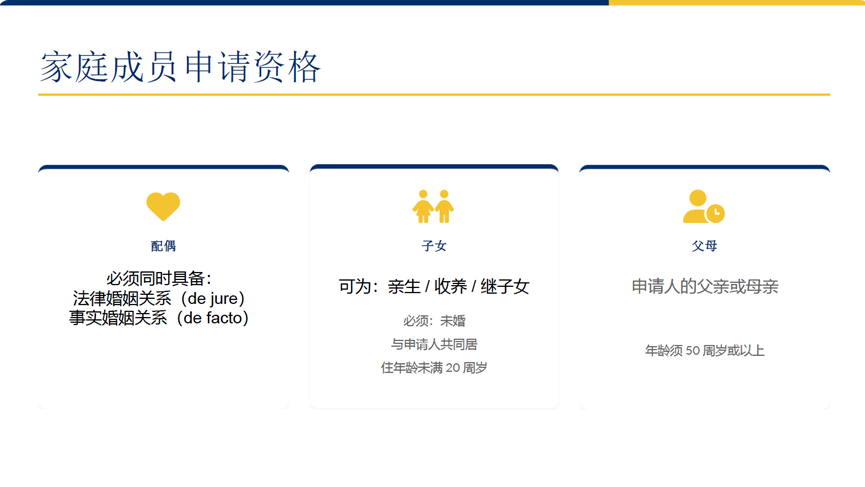
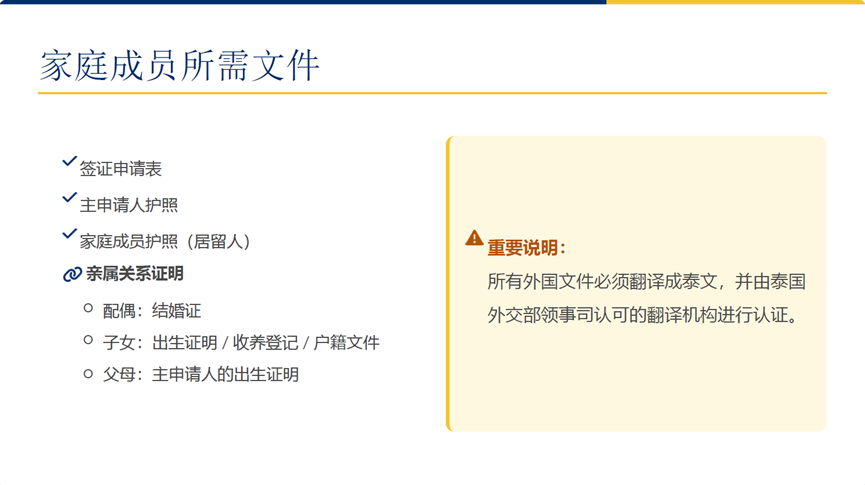
配偶需具备合法婚姻关系;子女需未婚,并满足年龄与共同居住要求;父母通常需达到规定年龄门槛。需要注意的是,家庭成员的居留资格依附于主申请人的投资条件,只要主申请人的房产或租赁关系持续有效,家庭成员的居留状态才能同步延续。
Spouses must have a legally recognized marriage. Children must be unmarried and meet age and cohabitation requirements. Parents are generally required to meet a specified age threshold. It should be noted that family members’ residency status is dependent on the principal applicant’s investment conditions. As long as the primary applicant’s property ownership or lease remains valid, family members’ residency can be renewed accordingly.

◆ ◆ ◆ ◆
已经买过房的人,还能不能申请?
Can Existing Property Owners Apply?
◆ ◆ ◆ ◆
一个被频繁问到的问题是:如果房子并非现在购买,而是此前已经在泰国购置,是否还能适用这条长期居留路径。从目前释放的信息来看,答案并非简单的“可以”或“不可以”,而是取决于房产本身是否符合条件。
A frequently asked question is whether individuals who purchased property in Thailand prior to the introduction of this policy can still qualify. Based on current information, the answer is not a simple “yes” or “no,” but rather depends on whether the property itself meets the required conditions.
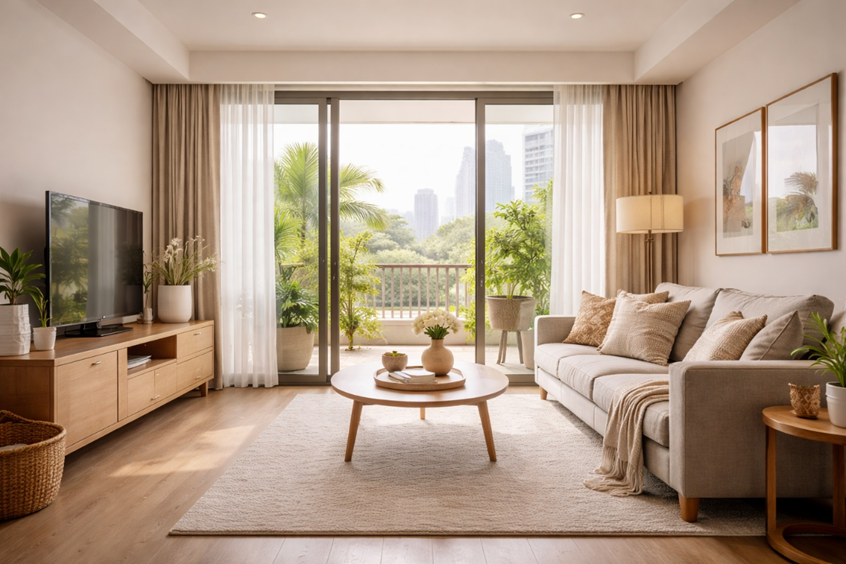
如果此前购买的是合规的公寓单位,购房金额达到要求,且产权关系清晰可查,那么在理论上,依然具备进入这条居留路径的基础条件。主要区别在于流程层面——新购房者往往可以由开发商协助办理,而已经完成购房的业主,则通常需要自行准备材料,通过常规渠道递交申请。
If the previously purchased property is a compliant condominium unit, meets the minimum investment amount, and has a clear, verifiable ownership structure, then in principle it still qualifies as a basis for this residency pathway. The main difference lies in the process: new buyers often receive assistance from developers, while existing owners typically need to prepare documentation and submit applications through standard channels.
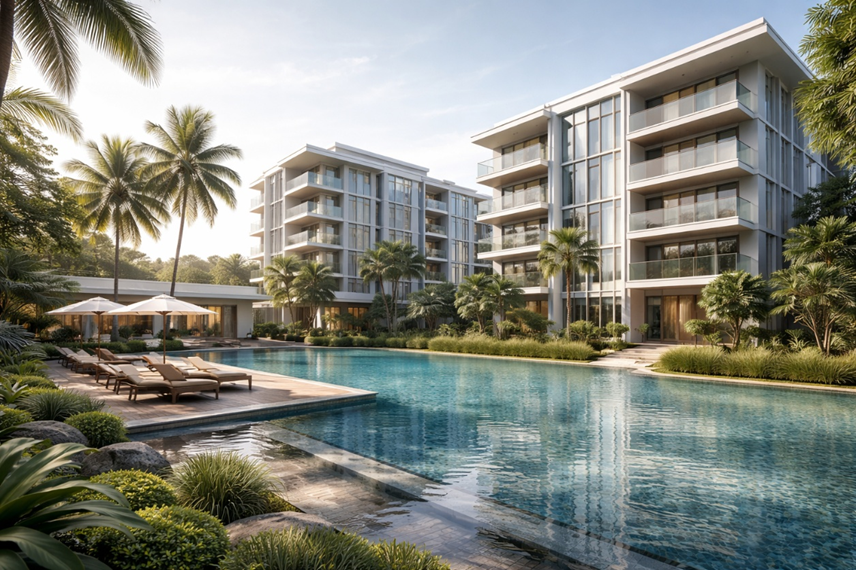
这也说明,这项政策真正关注的,并不是“什么时候买的房”,而是房产是否真实存在、投资关系是否持续有效。只要这些前提成立,新老业主之间的差异,更多体现在流程和成本上,而不是资格本身。
This further demonstrates that the policy’s true focus is not on when the property was purchased, but on whether the property genuinely exists and whether the investment relationship is ongoing and valid. As long as these prerequisites are met, the difference between new and existing owners lies mainly in procedure and cost, rather than eligibility.
◆ ◆ ◆ ◆
这件事背后的底层逻辑
The Underlying Logic Behind the Policy
◆ ◆ ◆ ◆
从更大的背景看,这并非一次孤立的签证调整。泰国并不缺短期游客,真正稀缺的是愿意长期停留、持续消费、并形成稳定本地投入的人群。相比工作签或养老签,把居留资格与可核查、可持续的资产投入绑定,是一种更可控的选择。
From a broader perspective, this is not an isolated visa adjustment. Thailand does not lack short-term tourists; what it truly seeks are individuals willing to stay long-term, engage in sustained consumption, and establish stable local investments. Compared with work visas or retirement visas, linking residency eligibility to verifiable and continuous asset investment offers greater controllability.
房地产恰好具备投入清晰、资产固定、监管成本相对可控的特点。这也解释了为什么政策强调“持续关系”,而非一次性资格。它筛选的不是身份标签,而是行为本身。
Real estate, in particular, features clear capital input, fixed assets, and relatively manageable regulatory oversight. This explains why the policy emphasizes “continuity” rather than one-time qualification. It filters not by identity labels, but by actual behavior.

综合来看,这项政策释放的是一个清晰信号:泰国正在重新定义长期居留的逻辑。
Overall, the policy sends a clear signal: Thailand is redefining the logic of long-term residency.
如果你对这项政策还有更多具体问题,或者有一些本文没有展开的细节,欢迎扫码加我微信交流,我会尽量基于目前已知的信息,帮你把问题讲清楚。
If you have further questions about this policy, or if there are details not fully covered in this article, you are welcome to scan the QR code and add me on WeChat. I will do my best to clarify your concerns based on the information currently available.
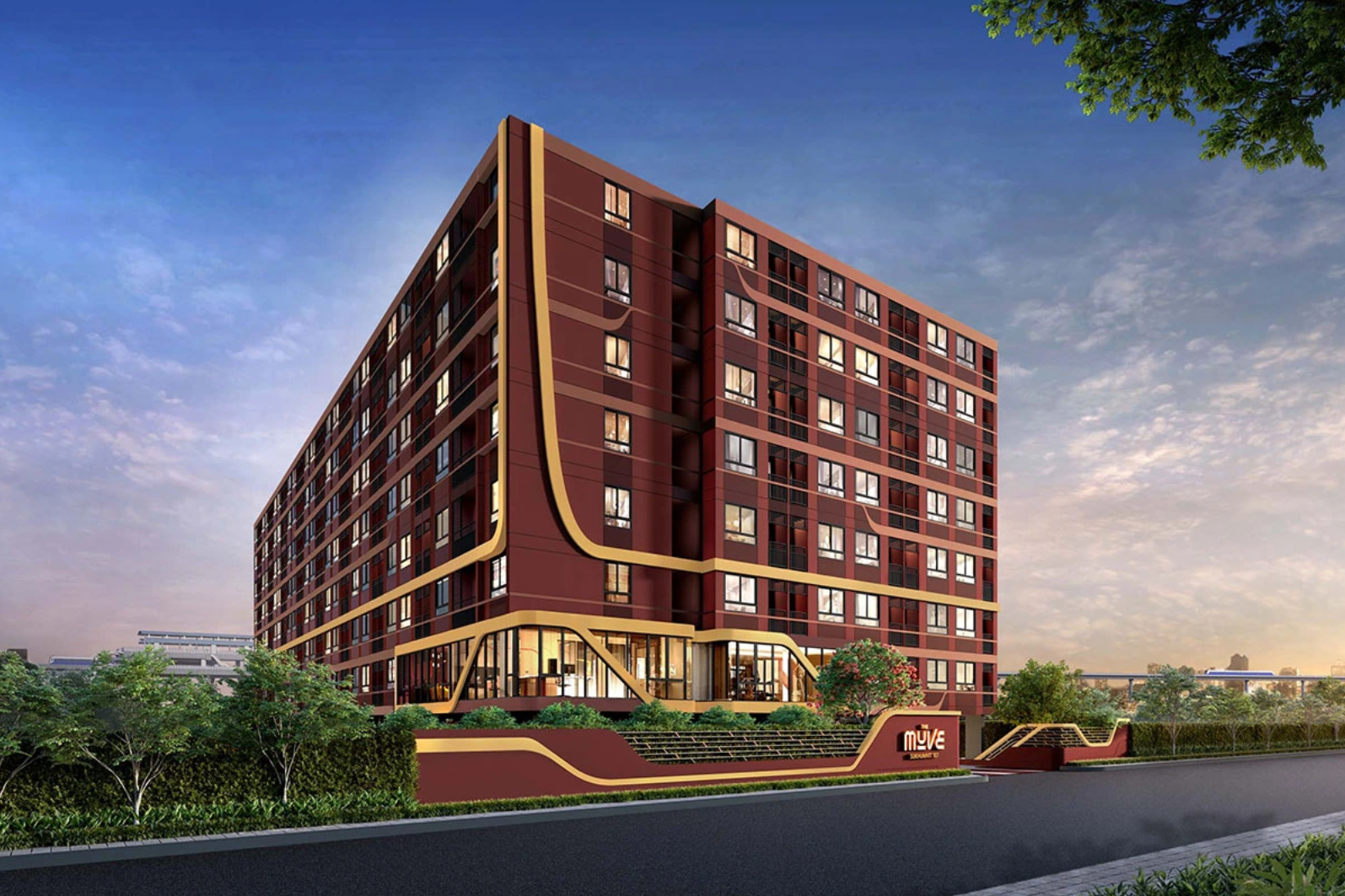
 泰国 · 曼谷
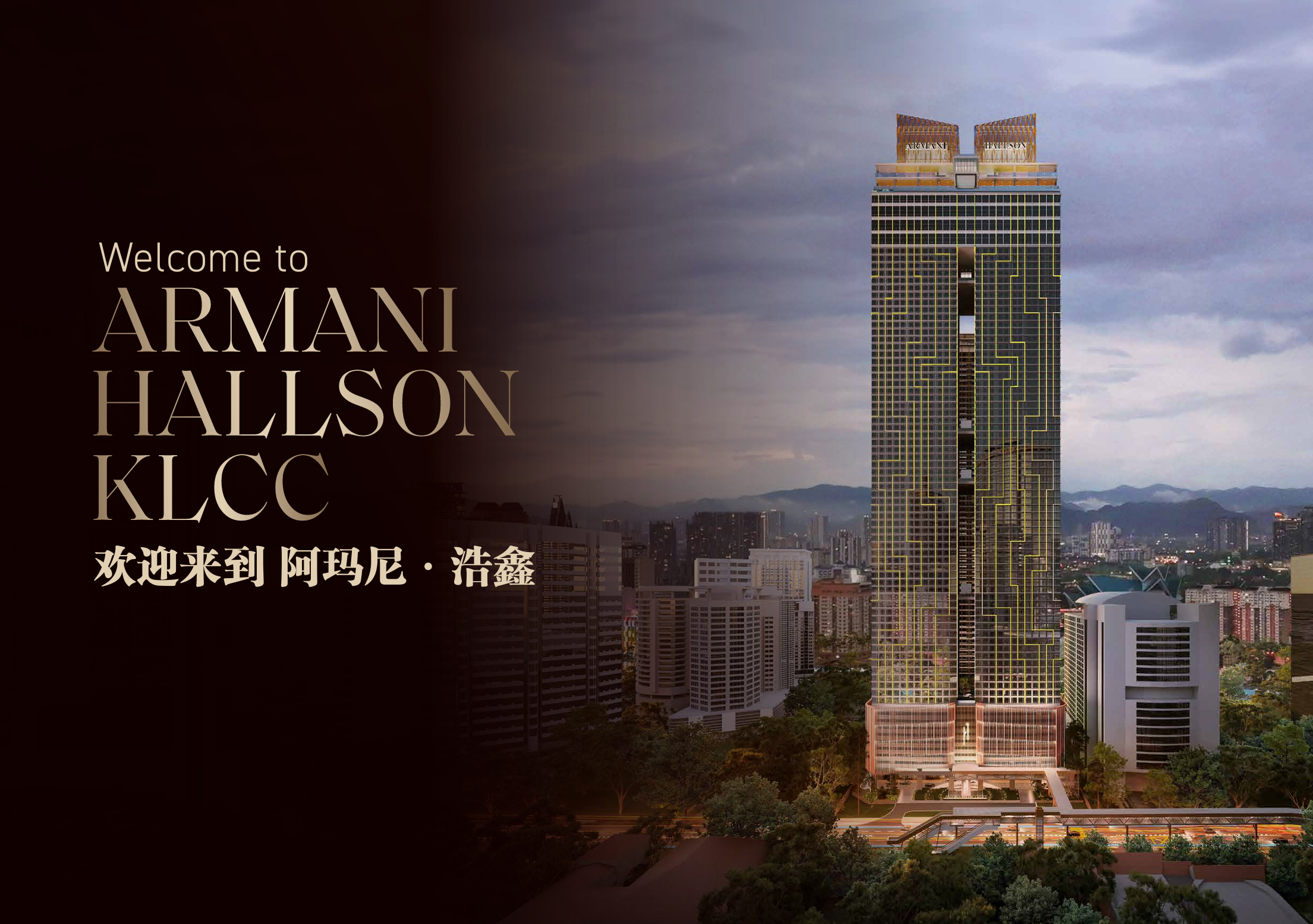 马来西亚 · 吉隆坡
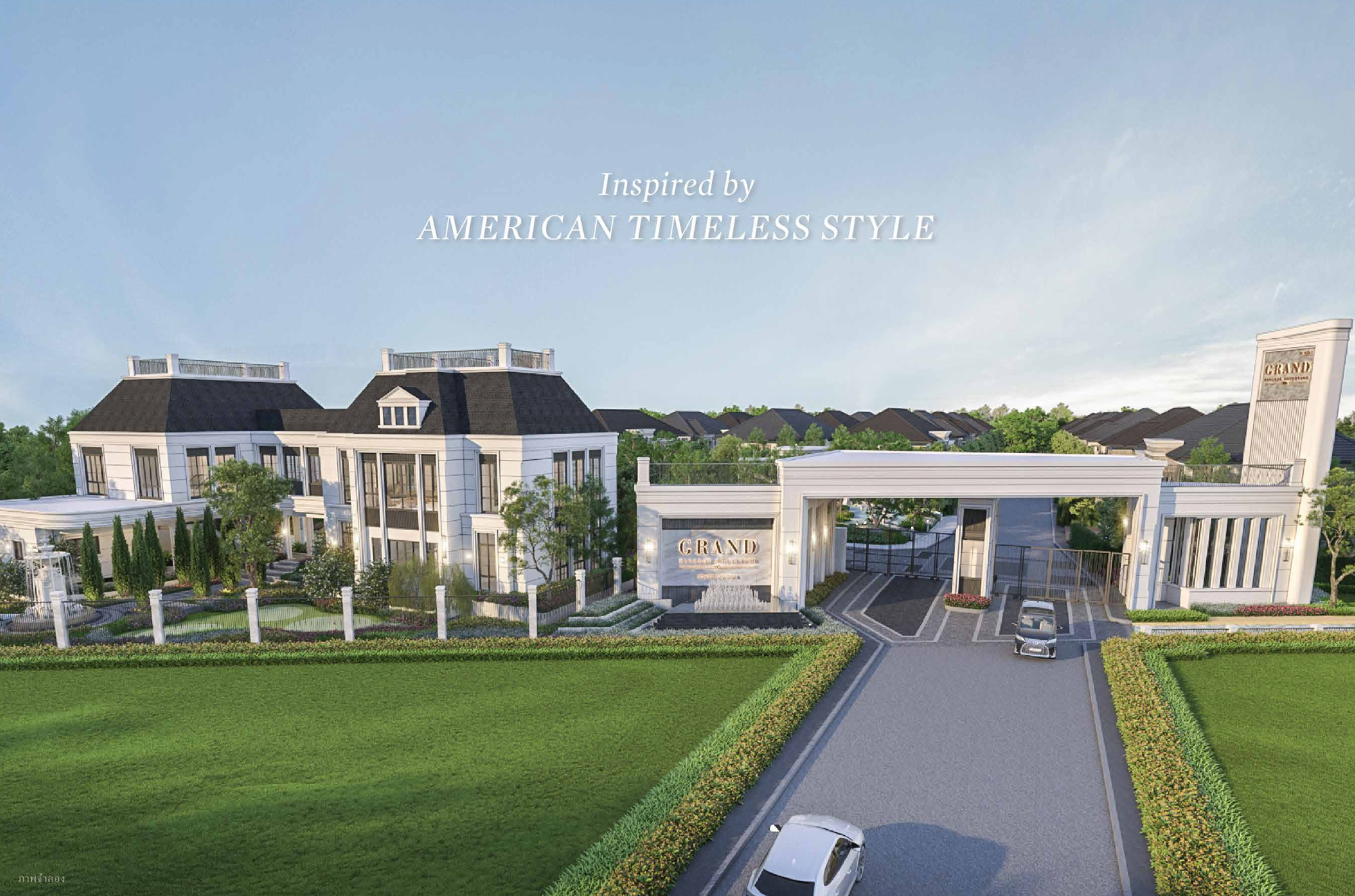 泰国 · 曼谷
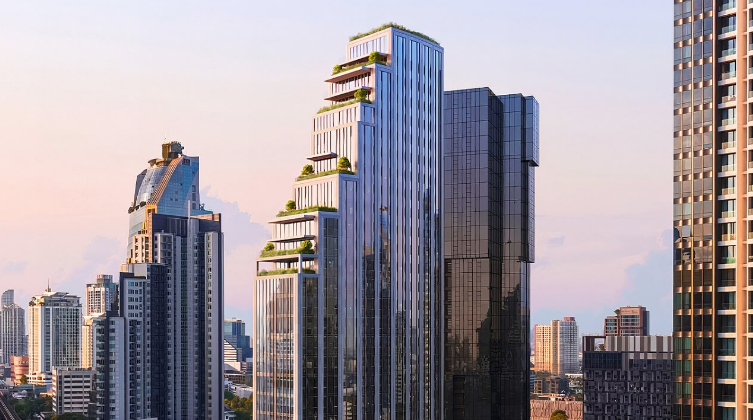 泰国 · 曼谷